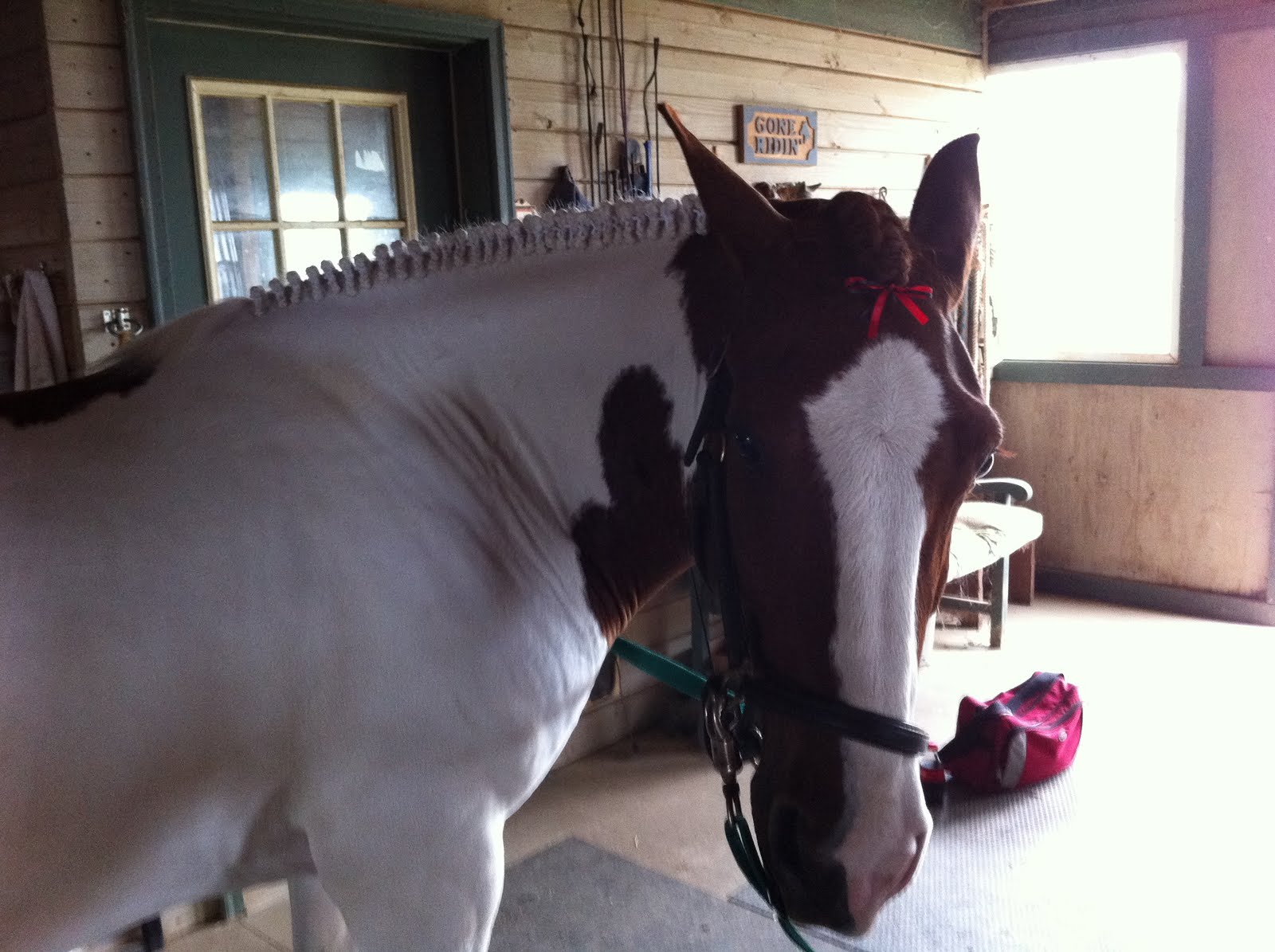
Wednesday, July 13, 2011

Please Send Championships-sized Birthday Wishes To...

WAYNE QUARLES!!!  Even on his birthday (I hear it's #25, but that could just be a rumor), Wayne is hard at work making sure Festival 2011 will be a HUGE success!!!

Happy Birthday, Wayne!  And THANK YOU for all of your hard work!

Tuesday, July 12, 2011

Cruel Summer

Alright...so, I wish when I told my friends that I was moving to Washington, DC over 7 years ago that someone would have pointed out that it is freakin' hot as Hades in this joint in the summer!!! And of course, I spend most of my "professional" day in a suit, followed by a couple hours in boots and breeches...man...I am just a sweaty, disgusting, smelly mess! So when Bananarama's 80's classic "Cruel Summer" came on the radio during my drive home, I knew just what to write about today...

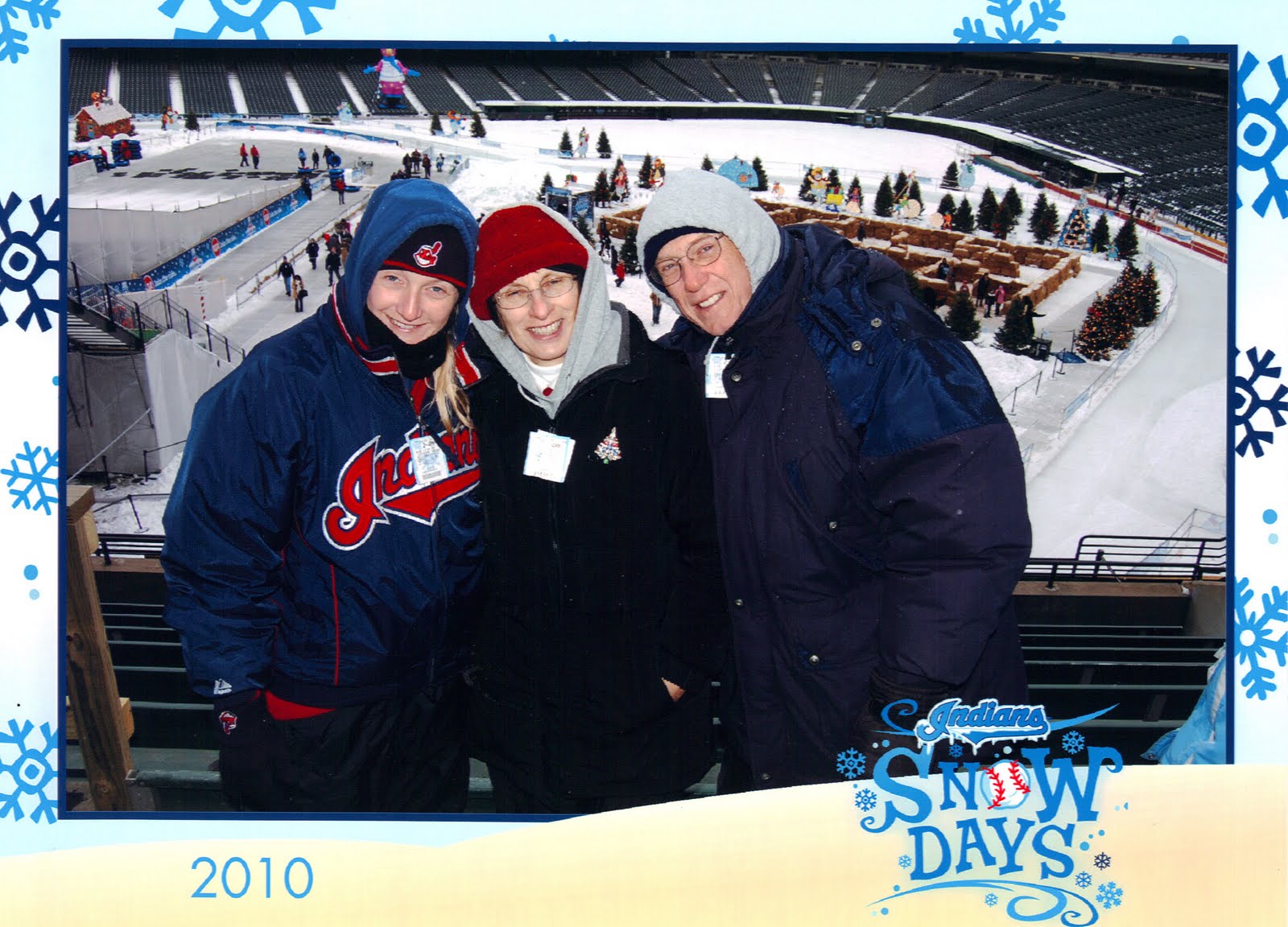
(Above: Me and my parents at Progressive Field, home of my beloved Cleveland Indians, when jackets were clearly not waived by the Ground Jury)

Waiving Jackets and What it Really Means.

Rules relating to preventing heat-related illness and waiving jackets reside in Appendix A of the USPC Horse Management Handbook and Rules for Rallies 2010. Appendix A is also known as the "Uniform Officiation Rules for USPC Rallies," (UORs) and while they are developed by the USPC Executive Committee (NOT the HM Committee), they reside in the HM Rulebook because you are required to have the HM Rulebook and all appendices for all mounted competitions and this saves adding them to all the different discipline rulebooks. Nifty, huh? If you've never given the UORs a read, I highly recommend it!

I want to focus on UOR A7 - Preventing Heat Related Illnesses. Let's face it, for most of the country, all of our rallies seem to happen in the months of April, May, and June, maybe squeaking into July. And it can get REALLY hot in some places (*ahem* Washington, DC) during those months. So rally organizers, Chief HM Judges, and you as competitors need to be prepared to deal with the heat and the potential for heat-illnesses.


The big factor isn't so much the actual temperature - it's actually the combination of this magical thing called "Heat Index" and the "UV index." Heat index looks at the combination of the actual air temperature and humidity. For instance, today it was 97 degrees in the District of Columbia, but it was over 50% humidity, making the "feels like" temperature around 110! YUCK!!! It is also important to keep an eye on the UV index - a high UV index means that there will be little to no cloud cover and the sun will be extremely intense. Result - increased possibility of heat-related illness.

So how does this all relate to you, the awesome Pony Club member? Well, let's face it...who REALLY wants to traipse around in a wool coat in 100 degree weather? (actually, apparently I do, because I have never competed without my coat, but then again, we all know I'm a little loopy...) Yes, the coats look nice, but they look much better if you're not passing out off of your horse from the heat! There is always some confusion about what you can or cannot do once jackets are waived, so I'll try to break it down for you.


When coats are waived because of temperatures/heat index in the "danger zone" (see chart on p. 67), the following rules apply:


  1. C1s and above still need to present in proper full formal or informal attire. This means, yes, you need to wear your jacket to turnout inspection.


  2. Everyone is required to warm up with their jackets off. No ifs, ands, or buts.

  3. Riders DO have the option to choose to ride their test with their coat on. If they want to wear their coat for their ride, neckwear needs to stay on. If they decide that they do not want to wear their coat during their test, neckwear should be removed, shirt collar opened (to maximize airflow) and helmet covers on vented helmets removed.


  4. Remember, shirts must have a collar and long or short sleeves (no sleeveless). T-shirts are not acceptable.

Beyond the question of "Coat or No Coat," you and your teammates should look after each other should it be a scorcher of a week in Kentucky. If a teammate says they are feeling ill, such as feeling dizzy, nauseous, shivering even though it's 100 degrees, or unable to sweat - have them sit still and GET HELP! Even if you're all doing fine and dandy, you should work as a team to make sure everyone is drinking enough water (as usual, there will be coolers of cold drinking water in the barns and at the riding venues) and eating food other than Skittles (although I am personally convinced that The Rainbow *is* a food group.)

And since I'm a cancer biologist by training - please be sure to apply and RE-apply your sunscreen while at Champs, even if it's a cloudy day. And if you run out, you can look for the glowing white orb wearing funky knee socks (that would be me and my reflective paleness) - I always have sunscreen in my bag!

Stay cool and see you in Kentucky in 6 short days!

Monday, July 11, 2011

Hungry, Hungry Horses!

Getting caught up from yet another busy weekend...Saturday was spent competing Twix the Super Pony at the Maryland Horse Trials (where he finished 5th in a very competitive Novice division and jumped double-clear despite me riding like a monkey in SJ!) Sunday I returned to the horse trials to volunteer as a dressage scribe. So if you competed in Ring 2 on Sunday and don't understand your comments, just shoot me an email! I really enjoy working as a scribe - it's helped me really appreciate the showmanship involved with throwing down a good test. And, as a Chief HM Judge, I feel totally validated when the judges make comments about horse and rider pairs who are wonderfully turned out!

Anyway, I was all set to go riding after work when Twix's owner called and said the main highway that I take to get up there was closed in both directions because of a gas line break. Eek. Traffic up to "my boys" is already pretty horrible, so I can't imagine how it was with over 6 miles closed in both directions. So early night back in DC...hanging out with my guinea pigs, Chuck and Mortimer (apartment-sized herbivores!) and figuring out what I should write about to best help you prepare for Festival, and I came up with "Feeds and Feeding."

Here in the Capital Region, and similarly for some of the other Pony Club regions in this area, we host predominantly one-day rallies. Gates open at 6 am, the briefing is usually at 7:15 am, and the first turnout inspections are at 8 am. Depending on our numbers, we can be done as early as 2 pm, or as late at 7 pm. The main reason why we have one-day rallies is that although we are in the heart of horse country, it is very difficult for us to procure an affordable facility that has sufficient stabling and riding areas. So while I know my Pony Club members are pretty awesome in the one-day rally format, I always worry a little bit when I ship them off to Championships because they are not used to a lot of the extra judging that goes on at an overnight rally.

One of the big things we miss in the one-day rally format is the opportunity to set up a feed room/trailer, and unfortunately this is one of the areas that I see as being the weakest across the board at Championships, particularly for regions like my own who are not as experienced in the multi-day rally format. So I wanted to talk a little bit about the "common mistakes" we see with feed rooms/trailers.

1) The Feed Chart. The HM Committee is always looking for ways to provide better guidance on how to put together a useful feed chart, but I think it's best to look at the purpose...Just as Iwas not able to get to my horses today because of a gas leak that closed the highway, it is possible that something could happen that would result in you arriving late to the Horse Park to feed in the morning. Thus, the purpose of the Feed Chart is to effectively communicate to anyone, not just a teammate, WHAT and HOW MUCH your horse eats, and WHEN he/she eats it. The information on the chart (and labels on the actual items) should be descriptive enough for an AHMJ to readily identify who gets fed what. Everything should be listed in weight, rather than volume (e.g., "6 lbs of Timothy hay" or "1 lb of Senior Sweetfeed"). You can list a conversion of your "scoop" (such as "4 quarts scoops = 1 lb Sweet feed"), but the chart must have some sort of weight listing. The feed chart should also list all supplements and medications to be administered and with which feedings they occur. Supplements and medications do NOT need to be listed in weight.

2) Hay. The biggest mistakes I see with hay are a) not labeling your hay with a simple duct tape label, and b) not tying it up after you've taken what you need at feeding time.

3) Grain/Concentrate Storage. So this is always a little tricky, and trust me, HM judges don't want to make it tricky. Basically, storage containers need to prevent the grain from getting moldy, but also prevent any animals (usually horses, but we all know that random small rodents mill around the barn late at night!) from getting into the food, eating it, and possibly getting very sick from eating too much at once. Horse trailers as feed rooms are considered "secure" and thus, you don't need to worry as much about horses getting into the storage bins (unless your horse is REALLY proficient at opening the side doors of a trailer or the ramp!) If you end up in with a feed STALL, however, you do need to secure the lids of your storage containers as described in HM Rule 13d. I strongly recommend pre-packaging your grain (making sure each meal properly labeled), unless all of the horses on your team eat the same feed. And I always recommend packing an extra day's worth of meals...just in case! And remember - plastic baggies are NOT acceptable for grain storage!!!

4) Top Off Buckets. Crazy old people like me may still call these "fire buckets" (like we could put out any sizable fire with our 5 gallon buckets! And geez, don't we require legit fire extinguishers??) Basically, every night before barns close, you need to put out labeled bucket of drinking water for us to use to top off your horse's water buckets during night checks. And yes, we do night checks. And yes, if you forget to put out a bucket, we will find a way to make sure your horse gets water, but make it easy on us and just put the bucket out every night! In the morning, you should empty the top off buckets and store them in the tack room. If you leave them out all day, the water inevitably gets gunky and gross. One of the biggest problems we see here is buckets that are too small. Top offs need to be 5 gallons, or two buckets that combine to be 5 gallons. You can use an extra "traditional" water bucket, "pickle" or "paint" buckets (like those big buckets they sell at Home Depot) or a combination of two small 2.5 gallon buckets. Please note, Cosequin buckets are NOT 5 gallons, so if you use them for top off buckets, you should probably use two.

5) Showing Up Late in the AM. You might be thinking, "what does this have to do with feeds and feeding?" Well, the reason why we have official "barns open/closed" times is to try and make sure horses are fed at approximately the same time, preventing a lot of kicking, fussing, squealing, and general shenanigans that can ultimately result in injury. The whole team can arrive together to do morning chores, or just one or two team members can come early to get the horses fed, but they must be fed within a reasonable timeframe of "barns open."

Alright, all this talk of feeds and feeding has made me hungry...

7 days until the official start of Festival 2011!!!

Eek! One Week...

...'til Champs move-in officially begins!!! Are you ready???

8 days 'til official start of Festival 2011!!!!


(only one week until USPC Activities Director and Grady the Gnome are reunited!)

- Posted using BlogPress from my iPhone

Thursday, July 7, 2011

All the Roads in Lexington are Paved in Gold(books)!

Okay, have you started getting at least a little excited about Festival yet? Or are you kind of freaking out at the concept that yes, in fact...

FESTIVAL IS 10 DAYS AWAY??!!

Egads. Where has the time gone?

But I digress. Today's topic for a blog-tastical adventure is (drumroll) THE GOLD BOOK. Isn't that swanky how I made the font gold? My mother always said I was too creative for my own good...anyway. What is The Gold Book? Do you need to read it? Why is it called "The Gold Book"? These are life's little mysteries that I aim to resolve in today's blog!

First of all, if this is the first time you're even hearing of THE GOLD BOOK, here's the link. I recommend that you download it and/or print it out and READ it before you even start packing your horse trailer for the trip to Kentucky. In short, THE GOLD BOOK "includes vital information that will help you prepare for Festival 2011. It will help you prepare for the Championships activities and the Educational programs and will answer many of the questions you might have." Got a question on whether or not stalls need to be stripped and checked by staff after Championships? It's in the Gold Book (and the answer is yes, or else you forfeit your $50 deposit.) Are we using Feed Rooms or Feed Trailers during Championships? You got it...it's in the Gold Book (and the majority of competitors will be in Feed Trailers.)

I could regurgitate much of the information in the Gold Book here in my ever-so-witty prose, but really, it's something you just need to sit down and read. I recommend printing out a copy and keeping it with your horse's health papers. The Gold Book represents the "Standard Operating Procedures" for Festival Participants, so you might even want to have a copy to share as a team (you can tuck it in with your Rulebooks!)

I do need to make a very important correction to the information on page 5 of the Gold Book, under the header "Other Horse Management Information." Item #1 says that screw eyes may be used for hanging items in the stalls. This is incorrect. Kentucky Horse Park rules indicate that nothing may be done to the stalls that will permanently alter the materials, so driving in screw eyes, nails, etc. to hang stuff like racks and buckets is NOT allowed. You may get creative with other hanging materials, such as baling twine, chains, rope, C-clamps and latticework to make your tack room a cozy little home away from home. Please refer to HM Rule 11 for more information about fastening materials and requirements for breakaway capabilities.

So, why is it called "The Gold Book"? Well, when I was in Pony Club, back before there was this fancy thing called the internet and "google" wasn't a part of daily lexicon, Championships information was sent out as an insert in the USPC News magazine. It was printed on yellow (gold) paper so that readers would know to pull it out and save it. Not only was it printed on gold paper, you only got one copy, so you treated it like it was gold! No one wanted to misplace their Gold Book!!

OK. Moral of today's story is READ YOUR GOLD BOOK! Capice?

10 Days Until Champs Move-In day!! :)

Wednesday, July 6, 2011

Exceeding the Standards...


(The always impeccably turned out Roger Rabbit - I love my greys!)


Hey Everyone! Hope you had a fun and safe Independence Day weekend! I actually enjoyed a very quiet weekend - it was the first weekend I had "off" since the first weekend of May, so it felt good to just be lazy and have some time to myself, especially with Festival on the horizon...


Speaking of Festival...Do you realize that exactly TWO WEEKS from today is what Chief HM judges call "Paperwork Day"? In non-Chief language, it's the first day of mounted competition, which means it's Turnout Inspection day! Turnout Inspection day is the day when you and your horses and ponies look your absolute most fabulous best, but I know it can be a bit stressful getting everything together to have that picture-perfect look, and it only gets harder as you move up the ranks. Since turnout inspections have always been one of my most favorite parts of Pony Club, I thought I would write down a few tips I've learned over the years. So, here it goes!


Tip 1: BE ON TIME. There is no faster way to sink your team's morale than to show up late to your turnout inspection. As a judge, it breaks my heart to see a kid who has tried so hard end up getting deductions for being late, but it's a very important life lesson. Your turnout inspection is your Pony Club job interview; you have to show up on time. In that same vein, there is such a thing as being too early. Making your horse stand in the waiting area 20 minutes before your scheduled time is a bit silly, and usually ends with a very antsy-prancy horse when you're actually being judged. The ideal range is 5-8 minutes before your scheduled time.


Tip 2: Practice your horse's ground manners before the rally! Yes, I know a rally is very exciting for a horse, but it's not an excuse for your horse to trample all over you or me. Just as you need to practice your jog out skills, you should also practice making your horse stand for a turnout inspection. Having a horse with good ground manners will not only keep you (and your judge) from getting trampled, but will also make your turnout inspection go faster! For those of you who *hate* turnout, this is a good thing! Also, it will make a super impression on your judge!


Tip 3: Make sure you know whether your attire is correctly formal or informal. I usually start every turnout inspection with the question, "how are you dressed today?" I think it's a good ice breaker to get you guys talking (and if you're talking, you must be breathing!), but sometimes the reaction I get makes me feel like I've asked you to explain how a space shuttle works! If you're unsure about anything relating to attire and whether it's formal or informal, check out HM Rule 7i (you'll find it on page 11).


Tip 4: Make sure you know the attire and tack guidelines for your discipline. Without fail, it seems like I encounter some tack or attire "issue" at a rally. And by issue, I don't mean fit issue. I mean, stuff that just isn't allowed! Make sure you review the attire and tack rules for your discipline so that you KNOW your equipment is on the up-and-up BEFORE you get to Champs. And no, the excuse, "they let me use it at every other rally," is not an acceptable inquiry. Period.

Tip 5: Don't use saddlesoap to clean your riding boots. One of the easiest ways to get an Exceeds Standards as a D or C1/C2 is to have super-shiny boots. Unfortunately, one of the most common missteps I see is Pony Club members cleaning their riding boots with saddlesoap -egads! Riding boots, particularly fancy tall boots, are made with a much finer grade of leather than your saddle, and typical saddlesoap products are waxy and dull the shine. Therefore, the best thing to use is shoe cleaner (I use a product called Kiwi Leather Lotion, a bottle of which costs about $5 at Wal-Mart or Target). It's like a really refined leather cleaner conditioner - you apply a thin layer, let dry, then buff with a brush. If I need to touch up the polish, I usually use a thin layer of cream polish, let dry, buff, then shine with an old pair of pantyhose. Trust me - your boots will be mirrors!


(Left: Roger's sparkly browband!)


Tip 6: Polish your metal with an actual metal polish. I have been obsessed with brass clincher browbands since they first became popular with the eventing crowd (which, yes, was before most of you were born.) In fact, the brass clincher browband on my beloved Roger Rabbit's jumping bridle is...um...17 years old. And it is always blindingly shiny. My product of choice - mainly for effectiveness and ease of use - is Nevr Dull (no, I didn't misspell Never), and a tin will last you a ridiculously long time. I also like Simichrome polish, but always go back to Nevr Dull mainly because it makes the least amount of mess and I get all my brass polished in a very short time. Just wiping your metal (particularly brass) with a rag is insufficient - the polish helps take the residue that dulls the shine off. Just don't use the polish on the mouthpiece of your bit.


Tip 7: It's never too early to deal with a dandruff "situation." If your horse has a dandruff "issue," you should probably start dealing with it now. Start with a human dandruff shampoo (I use Head and Shoulders Soft 'n' Silky on the greaseball pony, and have also heard good things about Suave Dandruff for Men from Pony Club members). Okay, that didn't work? Try a couple of consecutive days of treatment with Listerine (you need to try and pull the flakes out as you apply the shampoo and/or Listerine - none of the treatments will magically dissolve existing dandruff!) Listerine not working? Try MTG shampoo. If you start in advance, you should have "the situation" under control.


Tip 8: Don't wait until the last minute to clean the "unmentionables." Yes, sheath and udder cleanliness is still on the standards, and judges will at least attempt to check (although do let your judge know if they are at risk of getting their head kicked off!) A funny thing to note - this year, I've actually seen far cleaner sheaths than udders, which I find absolutely mind-boggling. I mean, udders are pretty uncomplicated to clean, but they can get just as gunky as a sheath. In terms of cleaning, you can use plain water, water with a touch of Ivory soap, or commercial sheath cleaners. If your horse is pretty dirty, you may want to use baby oil to help soften the smegma and make it easier to remove, but do realize that the oil will attract dirt if not rinsed out.


Well, I think that covers most of my "big deals," but if you have any questions about how to ace your turnout inspection, feel free to ask them in the comments section!


13 days until Festival 2011!!! Better get crackin' on that dandruff!!! :)

(Roger Rabbit expresses his opinion about getting yet ANOTHER bath...oh, the curse of being a grey horse!)

Saturday, July 2, 2011

Clipboards and Vet Box and Smoothies, Oh My!


The Capital Region is very fortunate to be located in the heart of the US Eventing Association's Area II, and our eventing rally was held in conjunction with the always well-run Seneca Valley Pony Club Horse Trials two weeks ago. Seneca Valley Pony Club hosts two recognized events each year, and it is one of my favorite events. The Maryland Region ran its eventing rally at another awesome Area II event - Waredaca. I mean how cool is it to have riders like Boyd Martin, Karen O'Connor, Phillip Dutton, etc., etc., at your PONY CLUB RALLY??? Pretty awesome, I think.


(Above: I try to be incognito at these horse trials, but apparently I can't escape HM!)


We usually run two rallies on the SVPC HT weekend, but our numbers were low for the Training/Prelim day, so we only held a rally on the Novice/Beginner Novice/Starter day on Sunday. Since I had Twix the Super Pony entered in a novice division, I took care of my HMO duties earlier in the week. One thing I've noticed in my three years as HMO is that clipboards seem to be a hot commodity! I *know* I started the season with 12 clipboards, and by the time we got to our third rally of the season, we were down to 6! Are you kidding me? Just goes to show you that you can label everything and it STILL won't get returned to you! Luckily, Target had some funky fruit patterned clipboards in the dollar bins (I'm addicted to the Tar-jay dollar bins!) and I added those to our HM kit, labeled, of course!


(Above: Capital Region's newest HM clipboards!)


(Right: The Capital Region's Informational Booth at the SVPC H.T. The Region also hosted a silent auction, which was quite successful!)


(Left: Grady checks in with Eventing Rally CHMJ, Elizabeth Young)


Because our rally is at the mercy of the horse trials' entries and schedule, it was a rather long day for everyone - grounds opened at 6 am, the briefing was at 7:15 am, and the first turnout was at 8 am. The last rides (the starter division) completed around 5:30 pm, and I think everyone was able to roll out around 6:30 pm. So kudos to the Capital competitors and parents for sticking out a very long day! We're already looking at ways to run the rally in two segments for next year so that our starters don't have to be there alllllllll day. I stopped by after my rides were completed and I'd met with our RS and SJ rally organizer about THAT rally the following week, and everything seemed to be going smoothly. The most popular feature of the rally were the vouchers for free smoothies from Fruit and Ice Connection (aka "Smoothie Lady)! Smoothie Lady is a LEGEND in Area II! They are the BEST smoothies, and so refreshing on a hot day at a horse trial! My favorite flavor is Berry Blend (strawberry, raspberry, blackberry), and a lot of the Capital kids get their smoothies as "parfaits" (whipped cream layers). I think I consumed at least 5 smoothies over that weekend...


(Far Left: Grady enjoys a Berry Blend Smoothie while visiting the Capital Region Booth...hey, wait...he never paid me back for that!!!)


(Left: Smoothie Lady teaches Grady how to Dougie, I mean, make a smoothie!)

So while I'm on Eventing Rally, let's talk Vet Box. What's the point? Well, since Pony Club is heavily rooted in eventing, the original intent of the vet box at rallies was to prepare you all for upper level eventing and the vet box at traditional full-format 3-day events, which while popular at the training level, are rapidly disappearing. The point is to help you learn about how your horse recovers from the effort of cross country. Vet box staff take a lot of time to record your horse's vitals, and sadly, I find that many competitors don't bother to ask to see the sheet to see how they recovered. I've also found that many lower level competitors are a bit unfamiliar with how to get a horse to cool a horse down after exerting exercise - yes, walking helps, but what REALLY helps is getting nice, cold water at arterial points (i.e., where you see veins popping out, like the throat and between the hind legs.) The cold water absorbs the heat from your horse's body, so you need to then scrape the now hot water off (otherwise, it's like a big wet blanket). At events like Rolex or Fair Hill, you'll see grooms set up stations that look like "horse washes" (a bucket at each corner.) The goal is to get the water on, have it absorb the heat from your horse, scrape it off, rinse and repeat.

The other part of the vet box is getting your stuff up to the box and back. This is where labeling becomes very important. I can't tell you how many times I've seen riders get off at the end of cross country and not know where their stuff is, or realize that something, usually the halter and leadrope, is missing. So work with your stable manager to develop a plan for the vet box, and make sure they or another member of your team can help you. Once all the tack is off, it is important to make sure you keep it all together. In many cases, you will pack your stuff up in big LABELED garbage bags to transport back to the stable area. I've also seen laundry baskets and big duffel bags. But in the end, it is up to you to make sure everything is labeled and organized in a way that YOU get it back at the end of the day (after all, you need to clean most of that stuff for turnback, right?)


My last pet peeve before I clean my boots and go riding on this beautiful day is the common water source in the vet box. I'm going to keep it simple:

1) Do NOT let your horse drink from the common troughs!


2) DO only dip into the tanks with designated buckets!


We want all the horses that come to Championships happy and healthy to go home the same way!

Oh, and if you were wondering how Twix the Super Pony did at SVPC - he was 3rd in a 19-horse division. Needless to say, I was very proud of the Little Monster!! :)


(Finders Keepers, aka Twix, braided and ready to go to SVPC HT! Competing at last fall's SVPC HT - photo courtesy of GRC)


17 days until Festival 2011 begins!